

Choosing the right palletizing system is one of the decisions that has the greatest impact on the efficiency of the entire end-of-line process. Yet it is also one of the most underestimated: often, the focus is solely on price or the stated nominal speed, without considering the parameters that truly make a difference in day-to-day production.
Layer robots or row robots? There’s no one-size-fits-all answer. It depends on the design of your production line, what you produce, how many product sizes you handle, and what margin of error you can afford. In this article, we explain the differences between the two systems, backed by concrete technical data, to help you make an informed choice.
A Comparison of Two Palletizing Approaches
Before going into detail, it is helpful to understand what distinguishes the two approaches at a conceptual level.
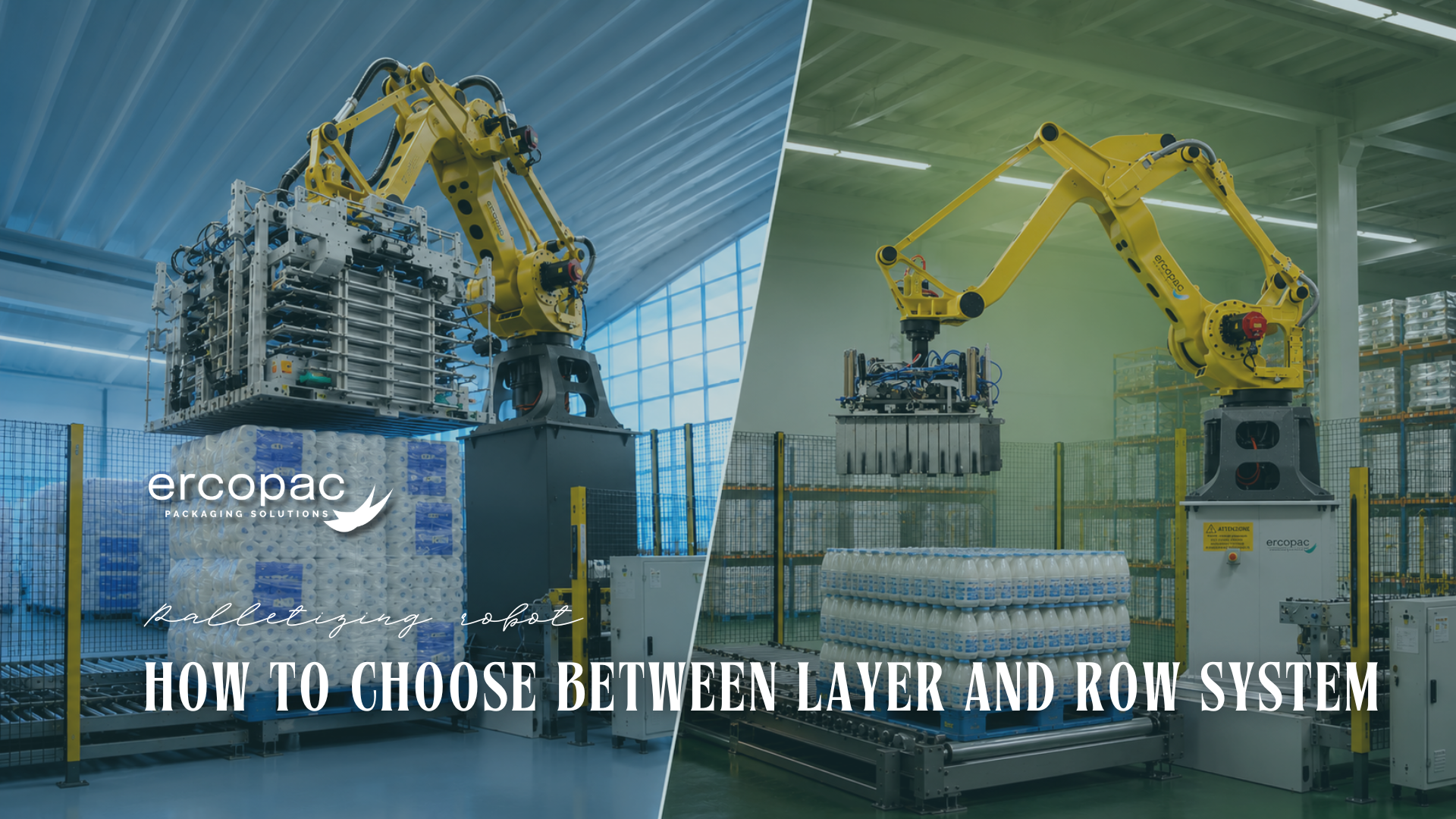
A layer system picks up an entire layer of products in a single motion and places it on the pallet. Maximum speed, minimal movements, and a fixed palletizing pattern or one with limited variations.
A single- or multi-grip robot, on the other hand, operates by rows or individual grips: it picks up one or more units at a time, orients them according to the desired pattern, and places them with precision. This requires more cycles per layer but offers total flexibility in terms of format and product.
The difference isn’t just technical; it’s a difference in production philosophy.
When to Choose the Layered System: Dragonfly
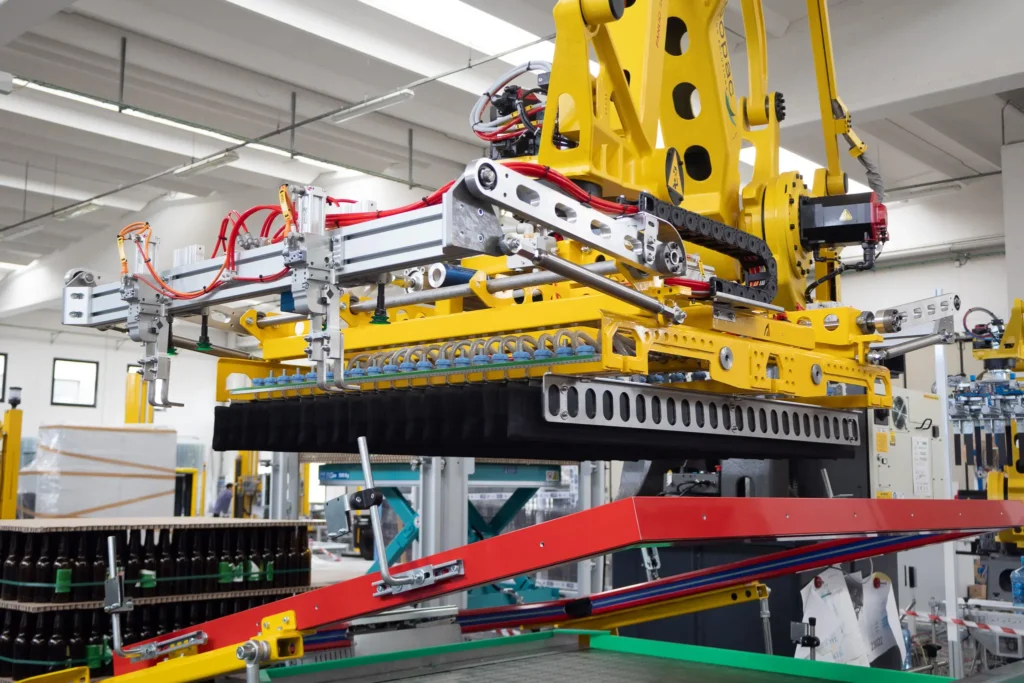
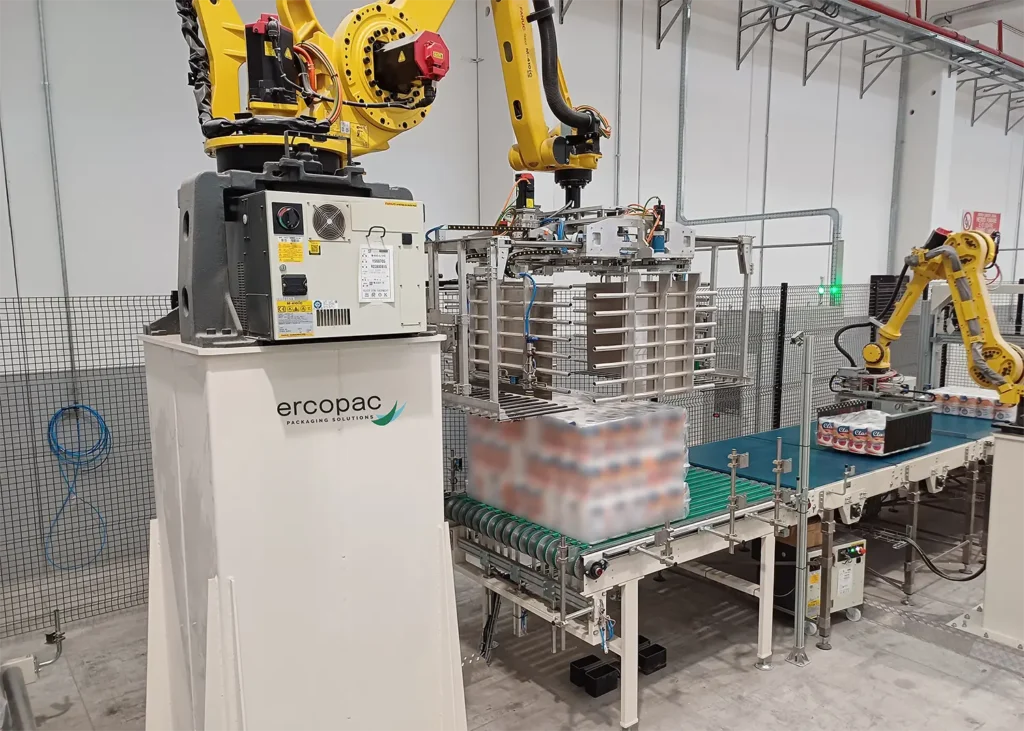
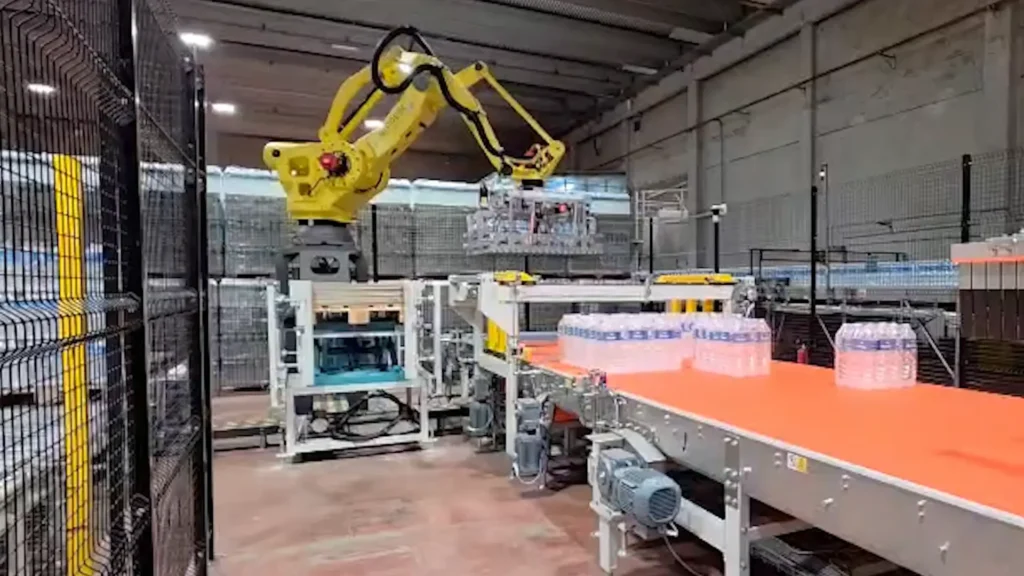
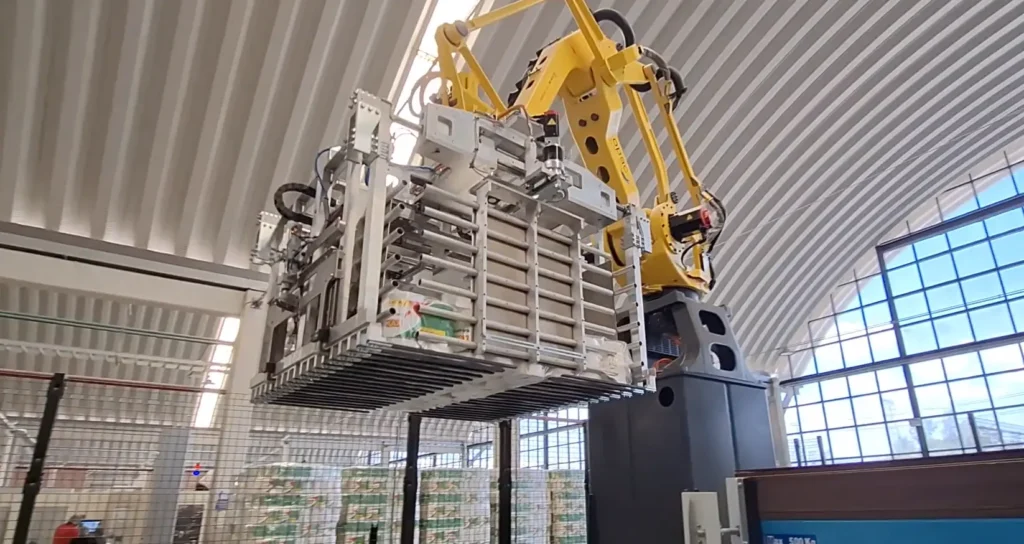
The Dragonfly is Ercopac’s layer system, available in Beverage and Tissue configurations. It is designed for high-speed lines handling homogeneous products with a stable palletizing pattern.
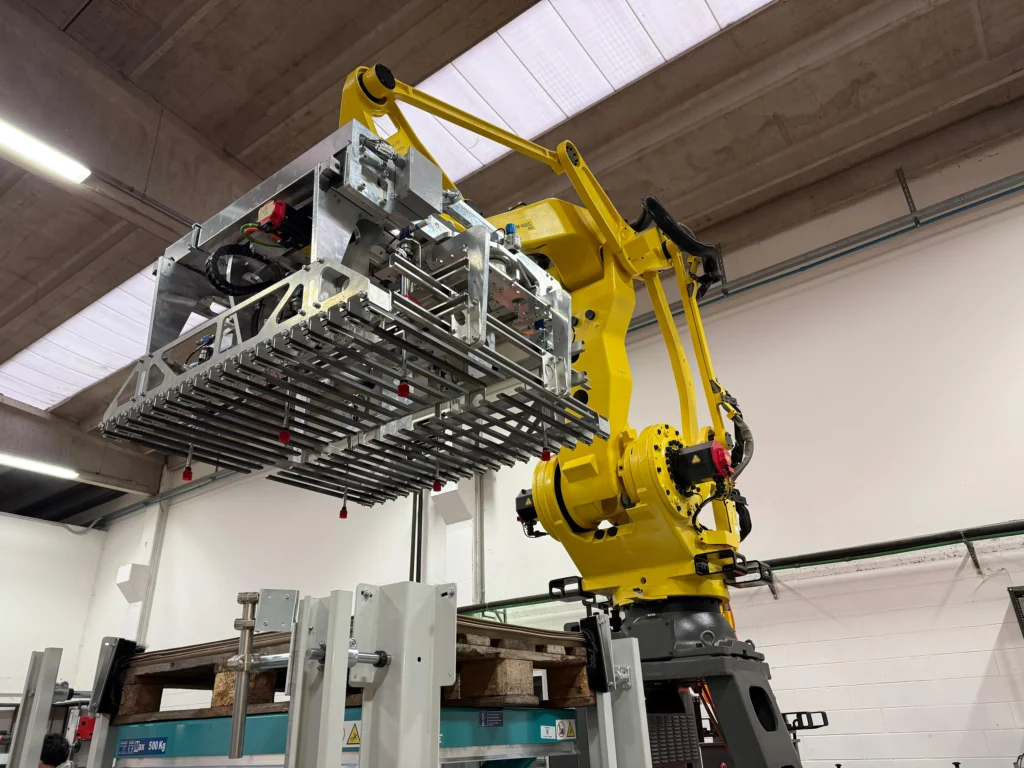
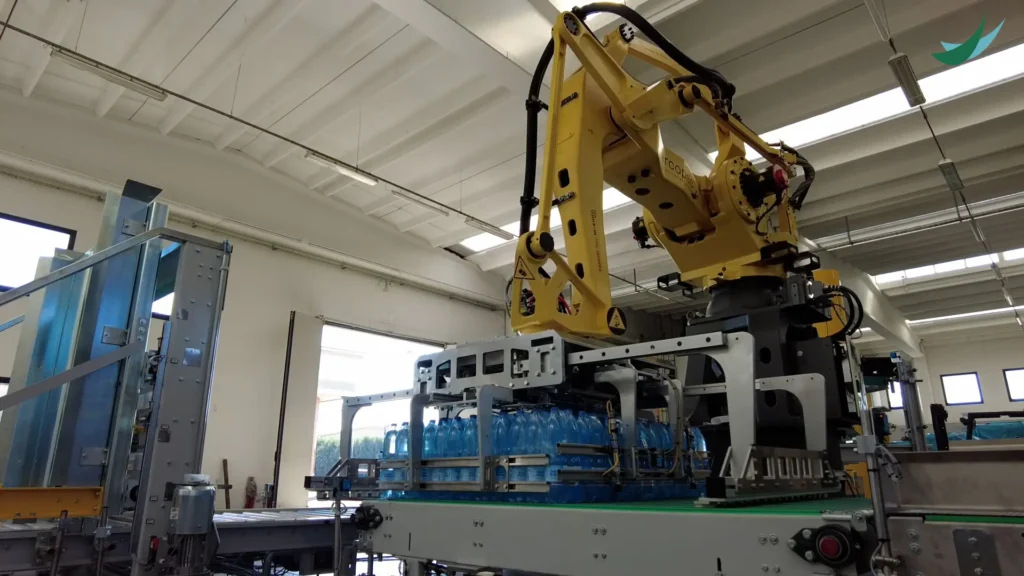
Key Features:
- Up to 9–10 layers per minute
- Gripper load capacity up to 250 kg (Beverage version)
- Handling of Euro pallets, half pallets, and industrial pallets up to 2,000 mm in height
- Compatible with 1, 2, or 3 production lines and up to 2 simultaneous inputs
At the heart of the Dragonfly is the motorized gripper with lateral squaring baffles: it picks up the entire layer, compacts it laterally before releasing it, and deposits it with millimeter-level precision. The result is a stable, squared-off pallet, ready for wrapping without any manual adjustments.
This is the right choice when:
- The line operates at high speed with low SKU variability
- The product is homogeneous (bottles, cartons, cans, bundles)
- The priority is to maximize production throughput
- The layout has sufficient space for the layer-based system configuration
A concrete example: the Fonti Alta Valle Po plant, Europe’s most fully automated end-of-line system, is built around this logic of high throughput and low variability. The Dragonfly is the natural choice for those producing large volumes with few formats.
When to choose the row robot: Lynx
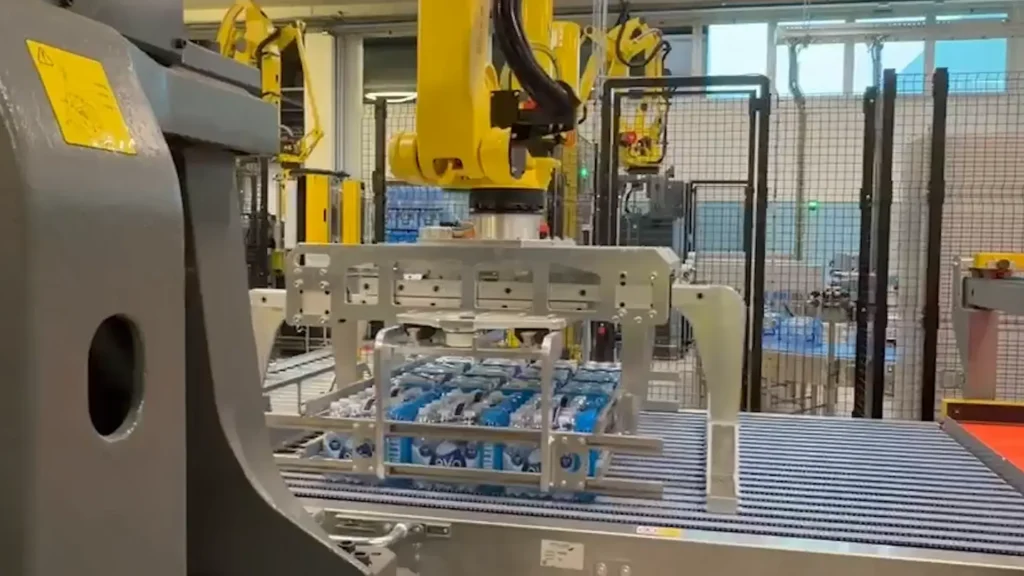
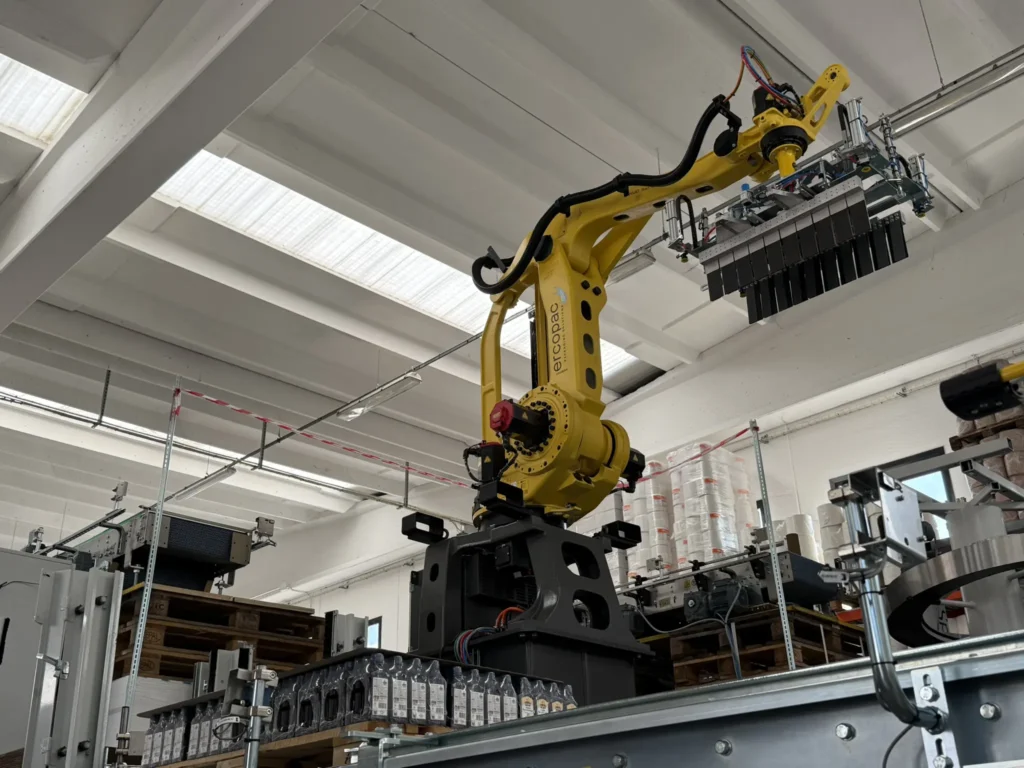
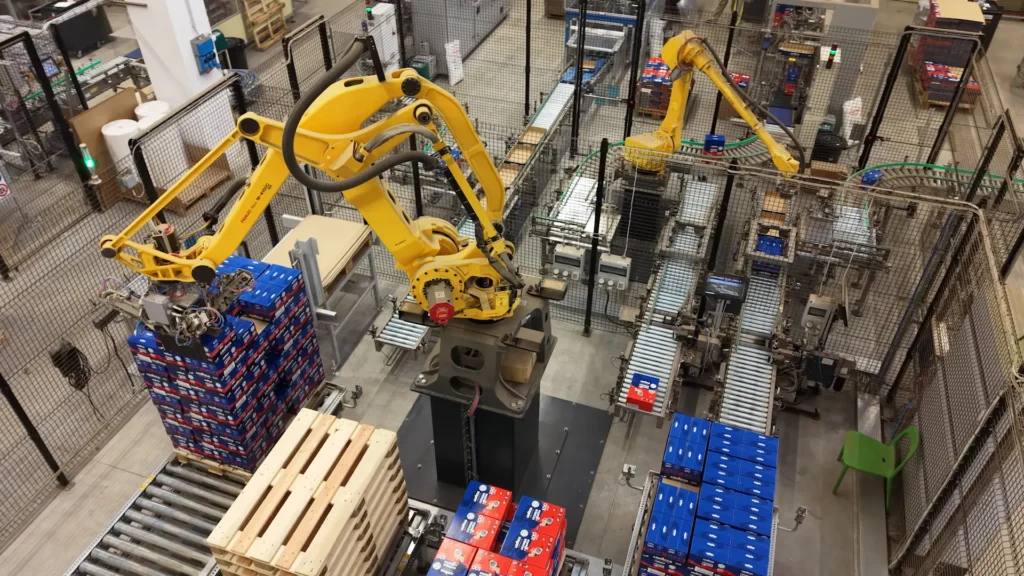
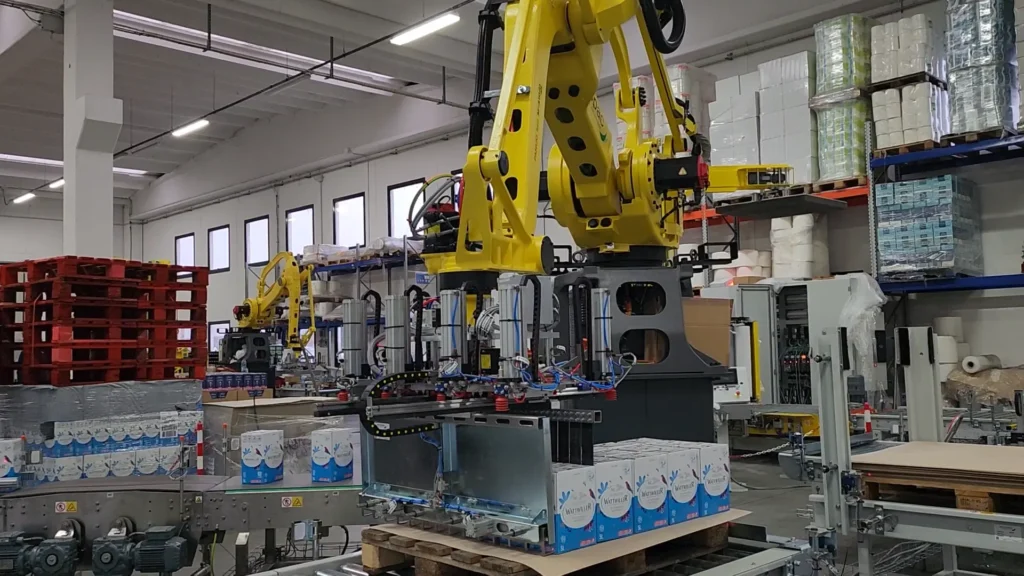
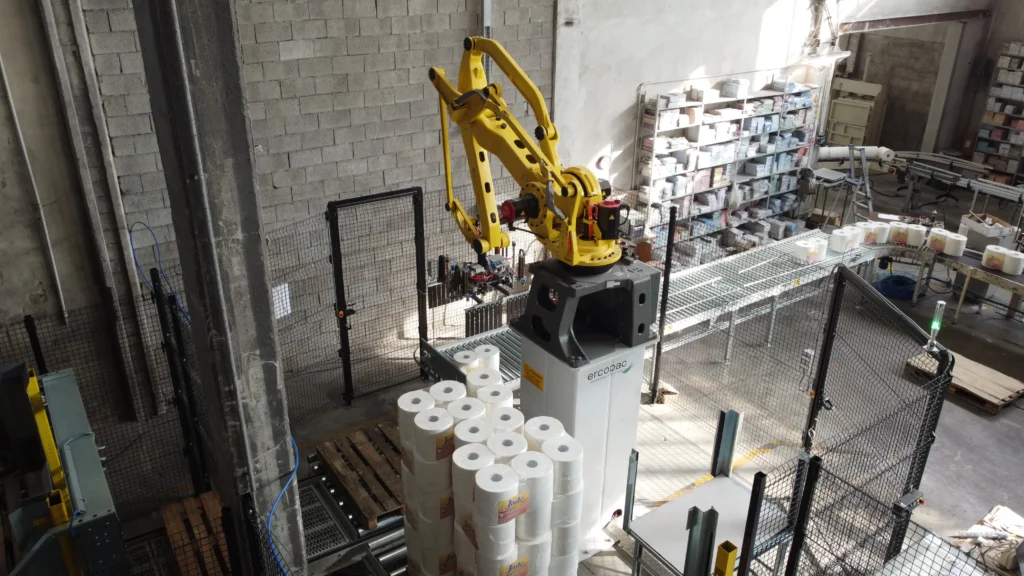
The Lynx is Ercopac’s row palletizer, available in single-line and double-line versions. It is designed for complex production environments involving diverse products or multi-SKU flows.
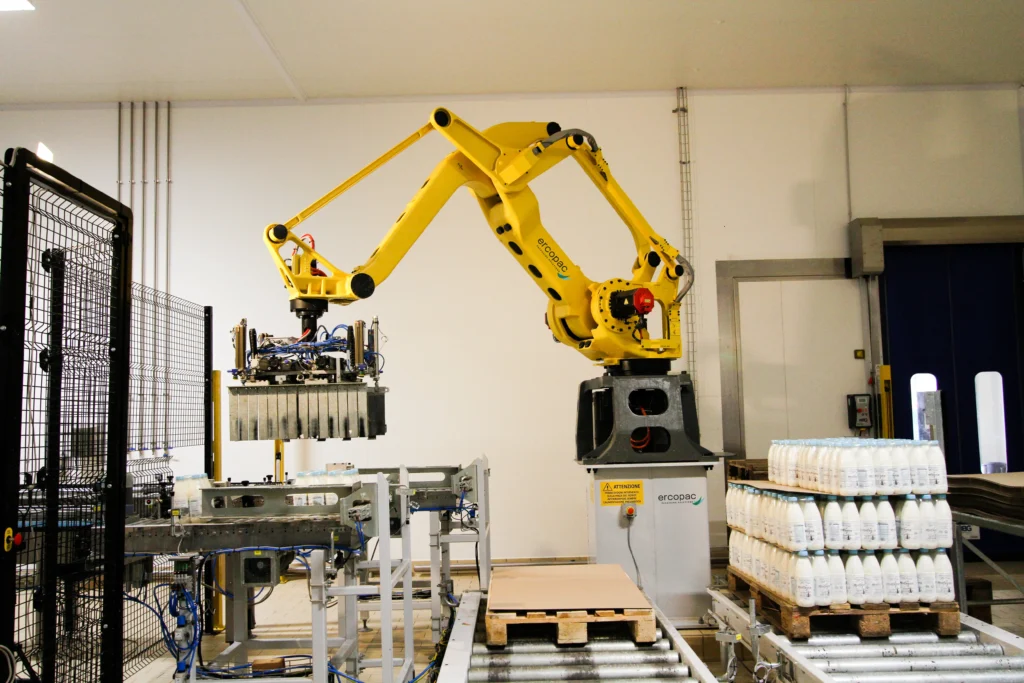
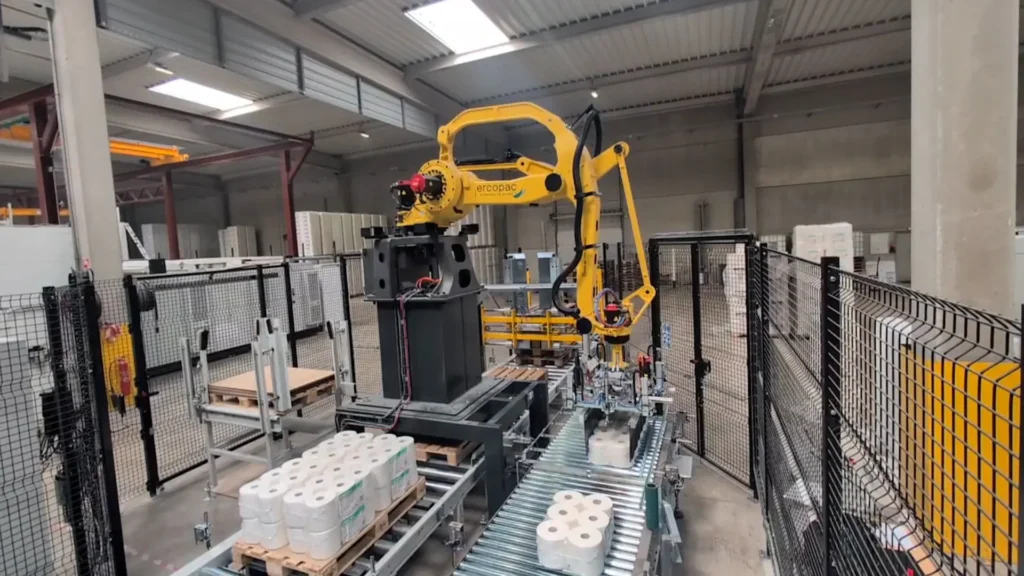
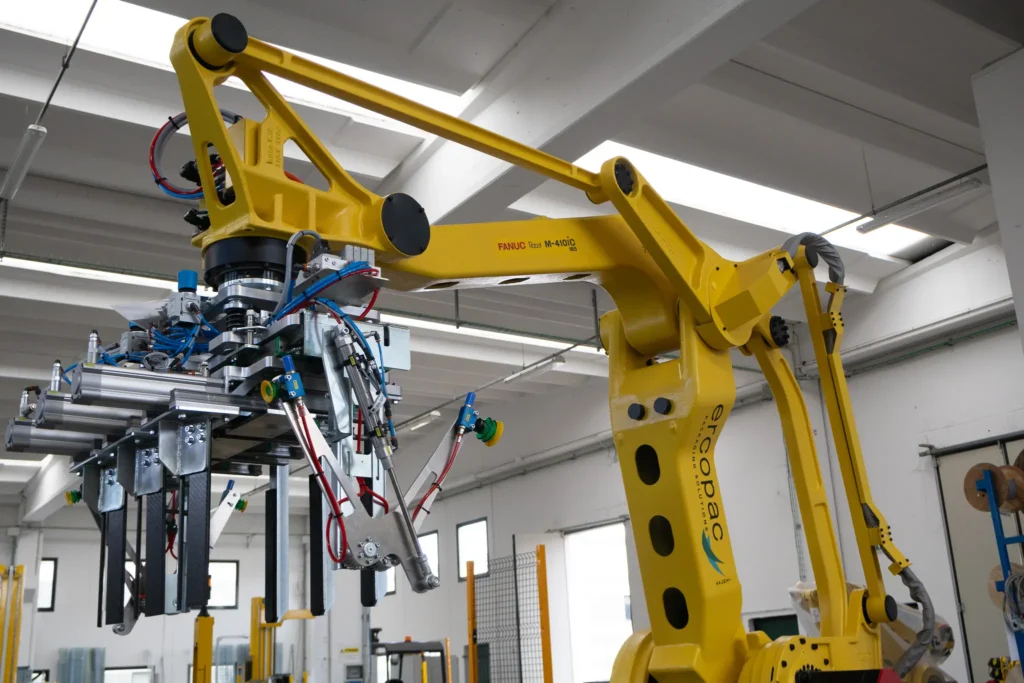
Key Features:
- Single line: up to 11 cycles per minute, gripper load up to 65 kg
- Double line: up to 8 cycles per minute, gripper load up to 65 kg
- Operates 24 hours a day, 7 days a week, with only one annual shutdown for routine maintenance
- Compatible with bottles, cartons, cans, boxes, bags, trays, and cardboard boxes
The Lynx’s most significant technical distinction is the complete absence of pneumatics on the gripper. All opening and closing operations of the gripping jaws are electrically controlled, with precise regulation of the force applied to the product. This means:
- No risk of deformation of fragile or lightweight products
- No compressed air system to manage on the gripper head
- Reduced energy consumption
- Drastically simplified maintenance: fewer components, less wear, fewer unplanned stoppages
The bar with integrated toothed projections on one side of the gripper also ensures a secure hold on the product even at high speeds, preventing slippage during positioning.
This is the right choice when:
- The line handles products of varying sizes or weights
- You work in co-packing or with multi-SKU flows
- The product is delicate and cannot withstand excessive pressure during gripping
- You are looking for low long-term maintenance costs
- Flexibility takes priority over absolute speed
Factors to Consider When Making a Choice
Let’s summarize the main criteria in a practical way:
| Parameter | Dragonfly (layer) | Lynx (row) |
| Maximum cycle rate | 9-10 layers/min | 11 cycles/min (single) |
| SKU Variability | Low | High |
| Product Type | Homogeneous, compact | Heterogeneous, including fragile items |
| On-board Pneumatic Gripper | Yes | No |
| Manutenzione | Standard | Reduced |
| Layout Flexibility | Medium | High |
| Ideal for | Beverage, tissue, high volumes | Co-packing, multi-format, diverse food products |
What if the production line changes over time?
This is a question worth asking before making a purchase. Production lines evolve: new formats, new markets, new products. A system designed exclusively for speed can become a constraint when the production mix changes.
The advantage of working with a single supplier for the entire line—palletizing, strapping, and intralogistics—is that the systems are designed to communicate with each other natively. When the palletizer, strapping machine, and conveyor systems speak the same software language, integration isn’t a problem to solve—it’s already built in.
How to Choose: The Starting Point
There is no single “correct” answer. There is, however, the right answer for your production line, your product, and your production goals.
The parameters to consider are simple: required throughput, number of SKUs managed, product type, available space, and anticipated maintenance budget. With this information in hand, the choice between Dragonfly and Lynx becomes much clearer.
If you’d like to discuss this with us, we’re available to analyze your layout and your needs. Contact us, and we’ll help you find the best configuration.